
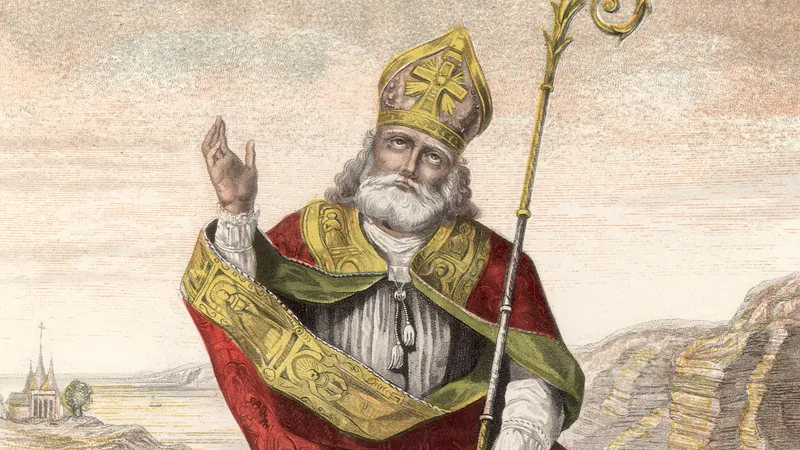
St. Patrick
The Romano-British slave who returned to convert his captors
The man who would become Ireland’s patron saint spent his teenage years in chains, dreaming of home. Patrick wasn’t Irish at all, but a Romano-British youth from a comfortable family who found himself herding pigs on a cold Irish hillside after raiders snatched him from his family estate. What happened next would reshape a nation’s soul.
The Reluctant Missionary
Born Maewyn Succat around 385 AD in Roman Britain, Patrick grew up in a Christian household but showed little interest in faith. His grandfather was a priest, his father a deacon and local magistrate, yet Patrick later admitted he was spiritually indifferent. Slavery changed everything. After six years of brutal captivity in Ireland, he experienced a religious awakening that would drive the rest of his extraordinary life.
Following a dramatic escape, Patrick trained for the priesthood in Gaul before returning voluntarily to the land of his enslavement. This wasn’t mere missionary zeal, it was something far more complex. He understood the Irish mind because he had suffered under Irish masters, learned their language through necessity, and grasped their culture through painful experience.
Converting a Nation
Patrick’s genius lay in adaptation rather than destruction. Instead of dismissing Irish customs wholesale, he transformed them. The sacred wells became holy wells, the seasonal festivals were rechristened as Christian celebrations, and the powerful druids found themselves competing with a man who understood both worlds intimately.
His famous use of the shamrock to explain the Trinity wasn’t just clever teaching, it was cultural translation of the highest order. Patrick took something universally recognised in Irish nature and made it the symbol of a new faith. He baptised chiefs and slaves alike, founded monasteries that would become centres of learning, and created a uniquely Irish form of Christianity that would survive Viking raids and Norman conquest.
Did You Know?
- Patrick’s own writings reveal he was considered poorly educated by his contemporaries and felt deeply insecure about his Latin
- He never claimed to have driven snakes from Ireland, that legend emerged centuries after his death
- His feast day, 17th March, was originally a solemn religious observance and only became associated with drinking much later
Discover more fascinating figures who shaped Ireland’s story in our People section.
